
Services
Measurements you can act on.
We can assist you with a wide range of monitoring solutions that deliver the measurements and information that give you greater security.
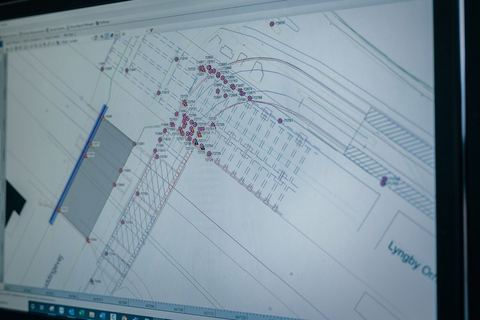
Eight areas, one system
Sensors at the strategic points follow the movement closely. The control centre responds when a tolerance is exceeded. The advice begins with a needs analysis.
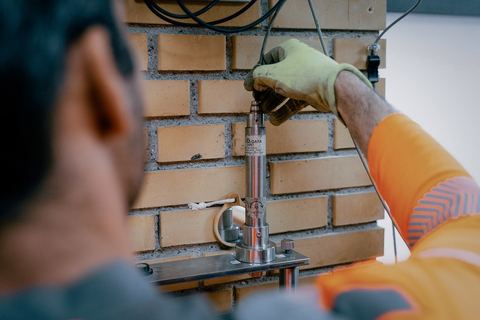
01 — Facility & construction
Monitoring of facilities and construction
When you follow movement on a building or a larger structure, the hard part is telling absolute movement from relative. Most reference points sit on structures, so when the building moves vertically the point moves with it — and the elevation data stops being accurate. Large projects also affect their surroundings through groundwater lowering and heavy traffic. Most compensation and insurance cases in this industry come down to elevation errors, which is why we recommend monitoring the baseline coordinates throughout the project. The control centre watches around the clock.
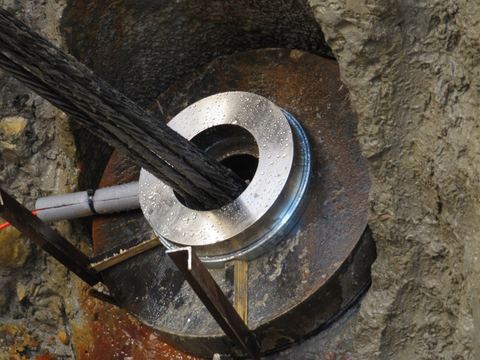
02 — Infrastructure
Infrastructure monitoring
Monitoring infrastructure with advanced sensors is an effective way to create security, predictability and assured function. Infrastructure is under pressure from climate change, extreme weather and human activity. We install sensors — total stations, inclinometers — at the strategic points, and catch signs of weakness early. That makes maintenance condition-based rather than calendar-based, and extends the life of the asset. See how a monitoring agreement keeps it running.
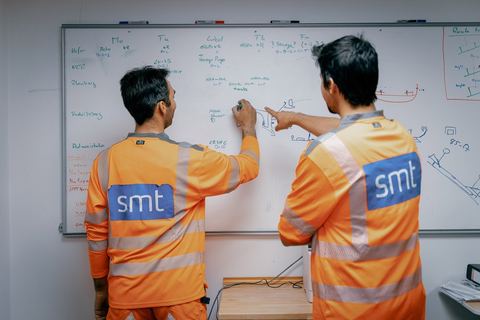
03 — Monitoring system
The monitoring system
At SMT you and your business get instrumentation and monitoring solutions that can talk to each other and to our control centre. Together with the customer we assemble an intelligent monitoring system from the project's requirements and risk factors, so measurements and information gather in one place rather than five. That is the part that makes data usable rather than merely available — and the advice starts with a needs analysis.
04 — Railway & track
Railway and track monitoring
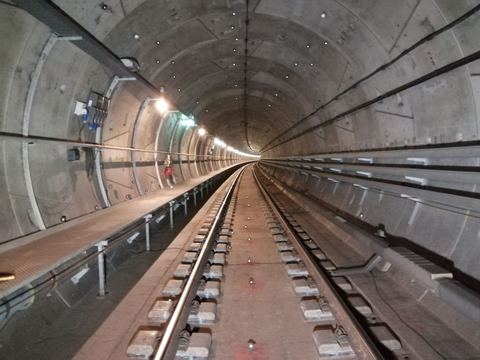
When you dig, bore or build close to a live track, every movement has to be seen before it becomes a problem for train traffic. We fit prisms to sleepers and rails and measure them automatically with total stations, typically every hour around the clock, with alarm limits of a few millimetres and data access for both the contractor and the track owner. At Aarhus Central two total stations followed 279 prisms on four live tracks, and at Kalvebod Brygge the tunnel boring machine passed beneath 21 railway tracks against limits of 2/3/6 mm. See the railway projects in the reference list.
05 — Bridges & structures
Monitoring of bridges and structures
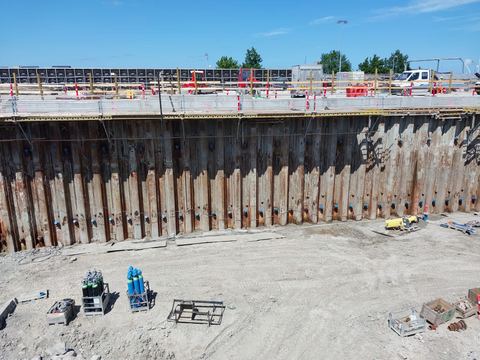
A structure tells you how it is doing if you measure in the right places. We instrument bridges, pylons, columns and temporary bracing with hydrostatic levelling, strain gauges and load cells, and gather the readings in one database with alarms. Inside the deck of the Storstrøm Bridge sits a hydrostatic settlement system with 106 sensors, and on Grenlandsbrua in Norway we measured the load in the struts between the pylon legs while the pylon rose. Read about the bridge projects in the reference list.
06 — Excavations & shafts
Monitoring of excavations and shafts
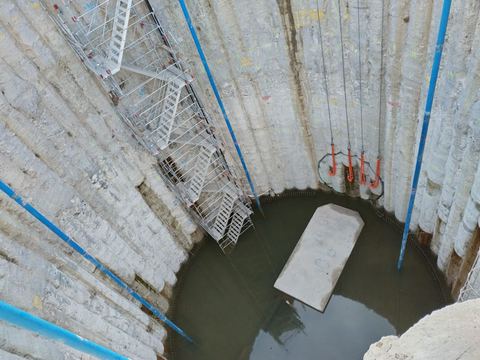
A deep excavation in a city or a harbour moves while it is being dug. We put inclinometers in the walls, strain gauges on the struts, tilt sensors at the anchor heads and GNSS or prisms on the wall tops, and update the alarm limits for every excavation stage. At the Nordhavn Tunnel, automatic inclinometers in ten excavation compartments gave early warning of wall deflections of up to approx. 100 mm, so the anchors could be re-tensioned in time. See the shaft and excavation projects in the reference list.
07 — Groundwater
Groundwater monitoring
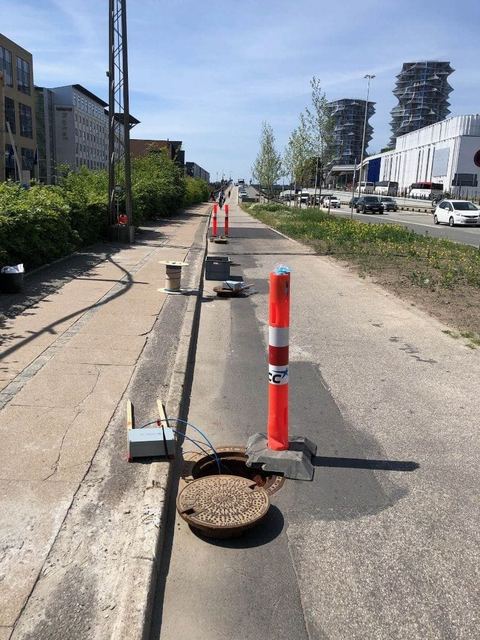
Groundwater lowering can cause settlement across a whole neighbourhood, and it is invisible until the damage is done. We put wireless dataloggers in the monitoring wells, add manual dip readings and keep wells and covers in order, so data arrives every hour and can be held against the project's limits. For Metroselskabet we follow the groundwater in 26 wells at M5 Østhavn and 9 wells in Nordhavn. See the groundwater projects in the reference list.
08 — Vibration & noise
Vibration and noise monitoring
Sheet-pile driving, compaction and heavy traffic send vibration into the buildings around a site — and for sensitive and listed buildings the limits are lowest. We fit wireless triaxial vibration monitors to DIN 4150-3, set the alarm limits by building category and send SMS and email alerts, so the work can be adjusted before damage is done. In Helsingør town centre we follow 14 measuring positions, and at Dantes Plads monitors sit on the buildings around the excavation, the National Museum among them. See the vibration projects in the reference list.
Where it is used
What we keep an eye on
Bridges
Denmark has thousands of bridges. Continuous monitoring makes inspection need-driven rather than calendar-driven.
Tunnels
Sensors at the strategic points catch movement and cracking while they are still small.
Railways
Unstable sections, particularly over embankments and bridges, are followed with sensors at the critical points.
What do customers ask?
Why does elevation data matter so much on a construction site?
Because most compensation and insurance cases in this industry come down to elevation errors. Most reference points sit on structures, so when a building settles the point moves with it, and the difference between absolute and relative movement becomes hard to see. That is why we recommend monitoring the baseline coordinates throughout the project.
Contact
What can we help with?
Tell us about the project and what worries you. We will assemble a monitoring system from the requirements and the risk factors — not from a price list.
+45 88 44 22 22 The control centre is on standby 24/7/365